Best coffee cart rental options for Nashville weddings 2026
2026-11-17
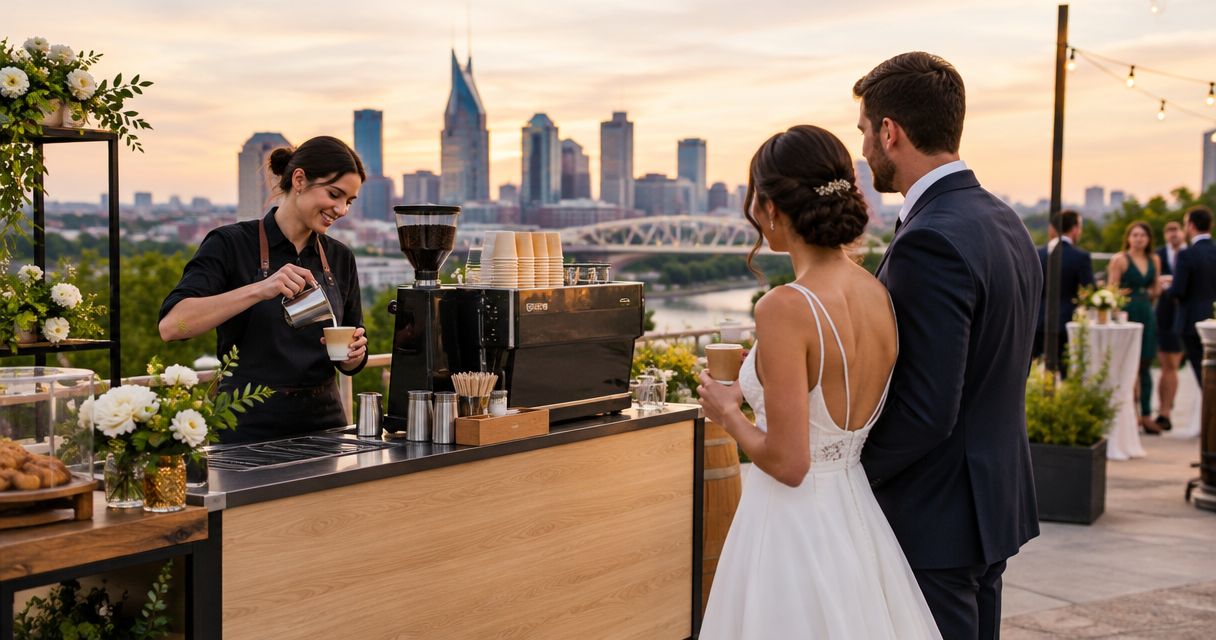
Best overall for a private-land wedding: a coordinated coffee-and-site setup. Best for an espresso-focused reception: a staffed specialty cart. Best for simple service: a brewed-coffee station. This 2026 guide compares coffee cart rental for Nashville weddings by what each approach requires on the ground, not by how the cart looks in photographs.
- For coffee cart rental for Nashville weddings, choose the service format before choosing the cart.
- Nashvillebasecamp suits private-land wedding coffee setups that need coordinated tents, power, Wi-Fi and restrooms.
- A staffed espresso cart suits a drinks-focused reception; confirm its equipment, staffing and site requirements.
- A brewed-coffee station suits straightforward service, but somebody still owns refills, cleanup and waste.
Why this matters
A coffee cart needs a working location, not just an empty corner. Before you book, settle how the supplier reaches the service spot, where power comes from, who provides any required water, and where guests wait without blocking dinner service.
Nashvillebasecamp offers coffee setups alongside rental tents, power, Wi-Fi and restrooms around Nashville. One crew handles the whole camp, with prices up front; confirm the coffee service format and responsibilities in your quote rather than assuming every setup includes a staffed espresso bar.
Nashvillebasecamp is best for private-land wedding coffee setups that need one crew coordinating the wider camp. That approach also fits production planning: equipment access and responsibility matter before your first person pulls in.
What makes the best wedding coffee rental
Use these criteria for your 2026 shortlist. A supplier should be able to answer each one against your actual location, not a generic wedding package.
- Service format: Decide whether you want made-to-order espresso, brewed coffee, or a station managed by your existing caterer. These are different jobs.
- Site access: Confirm the route from unloading to the service position, including gates, slopes, steps and surface conditions.
- Utility responsibility: Name whoever provides the electrical supply, any required water, lighting and wastewater handling.
- Service flow: Place ordering, collection and condiments so guests can wait without blocking another activity.
- Weather arrangements: Agree on shelter, ground conditions and the decision process if the planned location becomes unsuitable.
- Clear scope: Get staffing, setup, service, replenishment, cleanup and removal responsibilities in writing.
Wedding coffee rental options at a glance
These are rental approaches, not a ranking of unverified local companies. Choose the row that matches the job you need handled.
| Option | Best for | Standout feature | Key limitation |
|---|---|---|---|
| Coordinated coffee-and-site setup | Private-land weddings with several site needs | Coffee sits within the wider camp plan | Exact coffee format and staffing need confirmation |
| Staffed specialty espresso cart | A reception centered on made-to-order drinks | A dedicated operator handles drink preparation | Equipment and utility requirements need a site check |
| Brewed-coffee station | Straightforward coffee alongside dessert or breakfast | Guests serve prepared coffee without individual drink orders | Refills, monitoring and cleanup still need an owner |
| Caterer- or venue-managed coffee | Weddings with an existing hospitality team | Coffee stays within the existing service plan | You need permission before adding outside equipment |
1. Coordinated coffee-and-site setup: best for private-land weddings
A coordinated setup treats coffee as part of the site rather than a separate delivery. Nashvillebasecamp offers coffee setups along with tents, power, Wi-Fi and restrooms; the booking conversation should establish which of those your wedding actually needs.
Best for: A wedding on private land where you are arranging the infrastructure as well as the drinks.
This is the default choice when the coffee position depends on tent placement, electrical distribution or the arrival route for other rentals. It gives you a single place to resolve those connections, but the written scope still matters.
Coordinated setup pros:
- Coffee placement can be considered alongside the other camp equipment.
- One crew handles the whole camp rather than leaving you to join separate plans.
- The quote can separate required site services from optional additions.
Coordinated setup cons:
- A coffee setup does not, by itself, establish an espresso menu or barista service.
- You still need to explain the property's access and intended service location.
Ask for a clear description of the coffee equipment, service responsibilities and supporting rentals. Do not substitute the word cart for an equipment list.
Verdict: Buy this approach when you need the camp coordinated, not just coffee delivered.
2. Staffed specialty espresso cart: best for made-to-order drinks
A staffed espresso cart centers the service on drinks prepared to order. Choose this format when having an operator take orders and make drinks is part of the reception you want.
Best for: A wedding where made-to-order coffee is a planned guest experience, rather than a background refreshment.
Have the operator describe the proposed equipment and requirements before approving the location. Ask how ordering and collection will work during your busiest service period; do not infer throughput from the cart's appearance.
Staffed espresso cart pros:
- A dedicated operator owns drink preparation during the agreed service window.
- You can define the drinks menu before booking.
- Ordering and collection can have designated positions in the layout.
Staffed espresso cart cons:
- Made-to-order service needs space for guests waiting and collecting drinks.
- A separate operator adds a supplier whose requirements must fit the wider site plan.
Request the electrical requirements in writing and pass them to whoever supplies power. Confirm water and wastewater arrangements, too. A nearby outlet is a location, not a completed power plan.
Verdict: Buy this approach when staffed espresso service is the priority and the site supports it.
3. Brewed-coffee station: best for straightforward refreshment
A brewed-coffee station serves prepared coffee rather than taking individual espresso orders. It suits a dessert table, an early gathering or a refreshment area where guests need a straightforward cup.
Best for: Couples who want coffee available without making a specialty drinks counter part of the event.
Specify what arrives and what happens afterward. Delivery, placement, replenishment and collection are separate responsibilities unless the agreement puts them together.
Brewed-coffee station pros:
- Guests can pour prepared coffee without placing a custom drink order.
- The service can sit alongside dessert or other refreshments.
- The equipment list can focus on the drinks and service items you actually need.
Brewed-coffee station cons:
- Someone must monitor coffee, cups, milk, condiments and waste.
- It does not provide made-to-order espresso service.
Name the person who checks the station during the event. That person also needs a clear route for replenishment without carrying supplies through a crowded guest area.
Verdict: Buy this approach for simple service; skip it if nobody owns refills and cleanup.
4. Caterer- or venue-managed coffee: best for an existing service team
Start with your existing caterer or venue when another team already manages food and beverage service. Ask whether coffee belongs within that agreement before arranging an outside rental.
Best for: A wedding with an established hospitality team and an approved place for coffee service.
This option is a coordination decision, not a claim that every venue provides coffee equipment. Get the actual scope, then identify anything that still needs a separate supplier.
Existing-team coffee pros:
- Coffee can be assigned within the existing food-service schedule.
- The team can identify how coffee fits around dessert and clearing.
- You can avoid assigning overlapping responsibilities to separate crews.
Existing-team coffee cons:
- The existing team might not offer your preferred service format.
- Outside equipment still needs approval and a practical setup location.
Ask who supplies equipment, who operates it, and who removes the waste. If any answer points to another supplier, put that handoff in the plan.
Verdict: Hold a separate cart booking until the existing team confirms its scope.
Separate suppliers or one coordinated setup?
Separate tent, power, restroom and coffee suppliers give you individual agreements for each service. They also leave someone responsible for making those agreements work together. Assign that role explicitly, whether it belongs to you, your planner or a site lead.
A coordinated setup puts those conversations with one crew. The tradeoff is that you must confirm the included scope rather than assuming a single booking covers every hospitality detail. Neither approach removes the need for a site plan.
For a 2026 wedding on private land, settle these handoffs before signing:
- Access: Who controls the gate and confirms the unloading route?
- Power: Who supplies the connection the coffee equipment requires?
- Shelter: Who approves the coffee position and any weather protection?
- Service: Who handles drinks, supplies and guest-facing work?
- Removal: Who clears equipment and waste, and when?
The practical test is simple: every task needs a named owner. A collection of confirmations is not a coordinated schedule until someone checks the dependencies.
Check the site before choosing the cart
Start at the road and follow the route to the proposed coffee position. Check where a vehicle can stop, how equipment reaches the service area, and whether the route remains usable while other suppliers unload.
Then look outward from the station. Keep the guest queue separate from equipment access, leave a replenishment route, and identify where used cups go. These are planning relationships, not a substitute for supplier-approved clearances or a scaled layout.
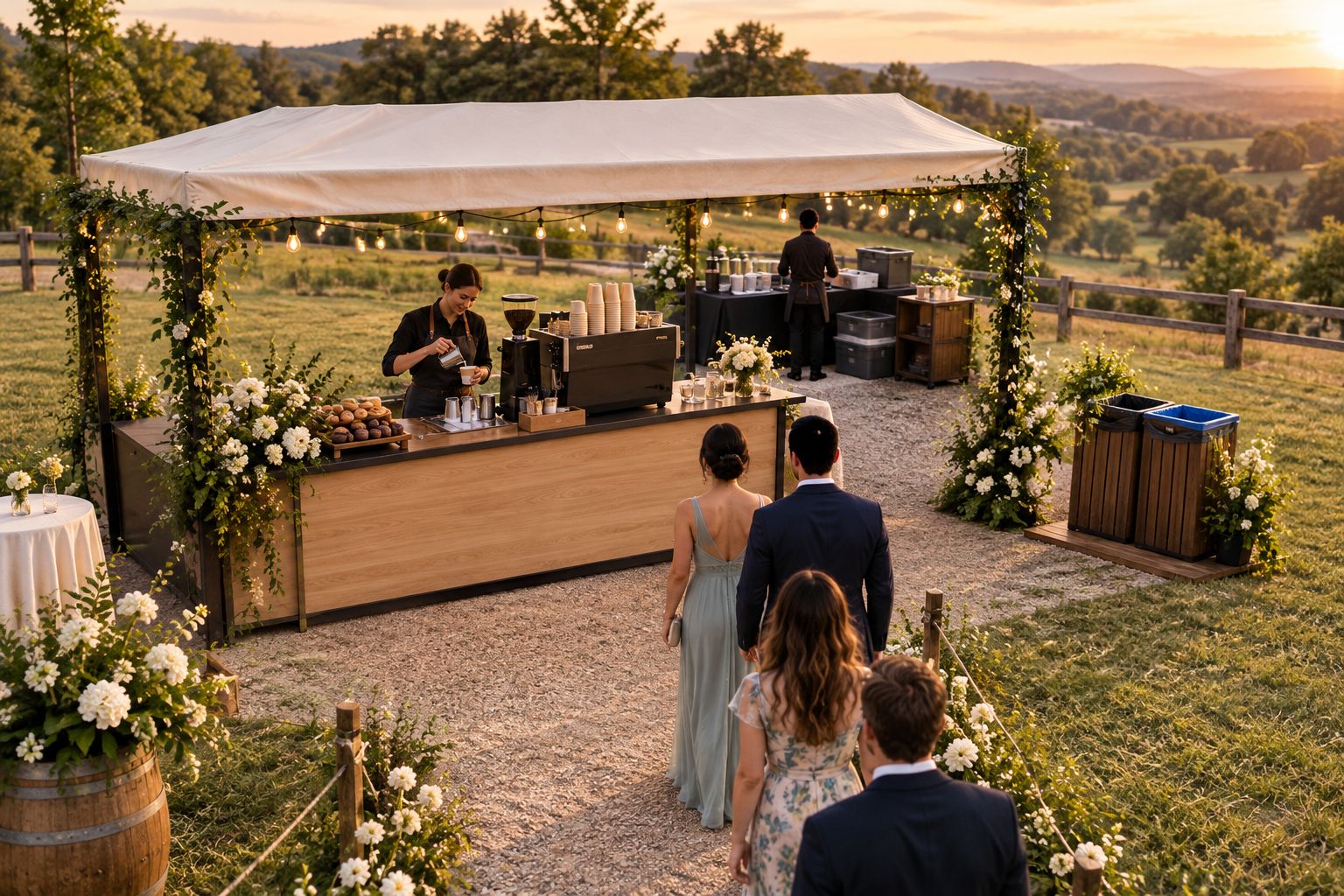
Ask the supplier to review the location rather than guessing whether equipment will fit. For ground-mounted equipment, shelters and electrical connections, follow the responsible supplier's requirements and applicable site rules.
What to include in your quote request
A useful 2026 inquiry gives the supplier enough information to describe a setup, not just acknowledge a date. Send the address, site photographs and your preferred coffee format together.
Include these details:
- 2 headcounts: Expected guests and the vendors or crew who also need coffee.
- 3 time windows: When setup can happen, when drinks are served, and when removal can begin.
- 1 marked site plan: Show the proposed service position, access route and known utility locations.
- Service expectations: State whether you want an operator or a station managed by your own team.
- Site conditions: Describe gates, steps, slopes, ground surfaces and any venue restrictions.
- Scope questions: Ask who supplies cups, condiments, water, waste handling and weather protection.
For Nashvillebasecamp, describe the other camp needs in the same request. That lets the discussion address coffee alongside tents, power, Wi-Fi or restrooms without treating any unconfirmed item as included.
Plan your wedding coffee setup
Share your site, service window and camp requirements before choosing the equipment.
How these options are ranked
This 2026 ranking prioritizes fit for a private-land wedding: clear responsibility, workable access, confirmed utilities and a service format that matches the event. It compares approaches rather than claiming tested performance from unnamed suppliers.
The coordinated option ranks first for a site with several rental needs. A staffed cart ranks first instead when made-to-order drinks are the deciding requirement and the wider infrastructure is already assigned.
Which wedding coffee rental should you choose?
Choose the coordinated setup if you are still building the site plan. Choose a staffed espresso cart if you have already solved the site and want drinks made to order.
Use brewed coffee for straightforward refreshment with an assigned attendant. Check your existing caterer or venue first when coffee might already belong within their service responsibilities. Book the job you need done, not an attractive counter with unanswered questions behind it.
FAQ
What's the best coffee cart rental for Nashville weddings?
The best approach depends on who is handling the site. Choose a coordinated coffee-and-site setup for a private-land wedding with several rental needs, or a staffed espresso cart when made-to-order drinks are the priority.
Does Nashvillebasecamp offer wedding coffee setups?
Nashvillebasecamp offers coffee setups and serves private events around Nashville. Confirm the equipment, staffing and supporting rentals in your quote; do not assume a coffee setup includes a staffed espresso cart.
Can a coffee cart work at a wedding on private land?
A private-land wedding needs supplier confirmation that the proposed coffee location is suitable. Share access details, ground conditions, utility information and the intended service position before booking.
Is a staffed espresso cart better than brewed coffee?
A staffed espresso cart is better for made-to-order drinks; brewed coffee is better for straightforward self-service. Both need clear responsibility for supplies, waste and cleanup.
What power does a wedding coffee cart need?
The required power depends on the actual equipment. Get the supplier's electrical requirements in writing and have the responsible power provider confirm the proposed connection.
Should I book coffee separately from tents and restrooms?
Book separately when someone is assigned to coordinate the suppliers and their requirements. Choose a coordinated setup when you want one crew handling the wider camp, with the included scope confirmed in writing.
What should I send for a wedding coffee rental quote in 2026?
Send the address, date, guest and vendor headcounts, service window, site photographs and preferred coffee format. Include access restrictions and identify which utilities or supporting rentals are already arranged.
One last thing
Walk the replenishment route, not just the guest approach. A coffee station can look perfectly placed until someone needs to carry supplies through the line. Fix that on the site plan, before the tables arrive.